
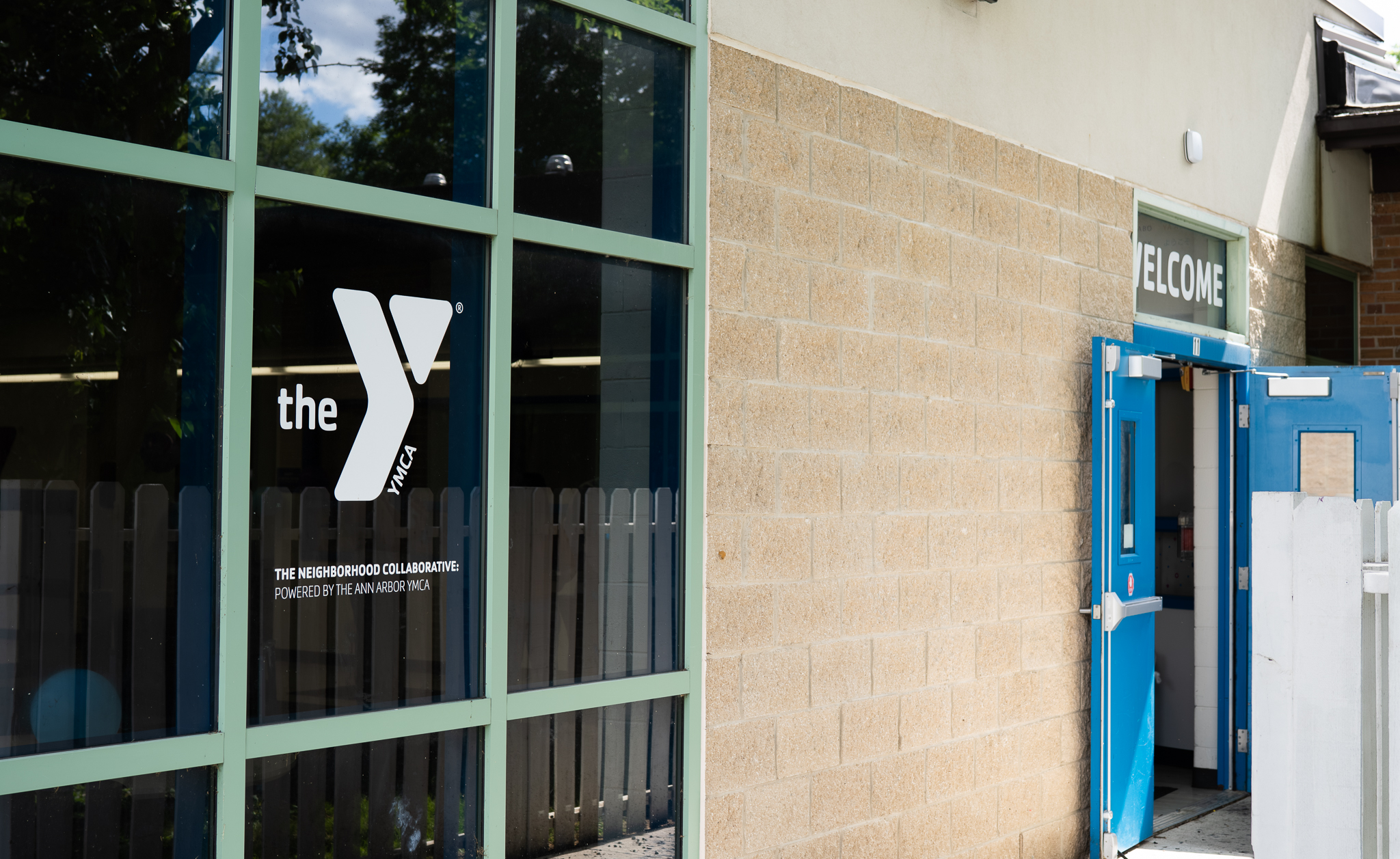
The Ann Arbor YMCA is opening a new chapter in Ypsilanti’s Normal Park neighborhood with the launch of The Neighborhood Collaborative, a community-centered program hub designed to make wellness, youth development and civic engagement more accessible to local residents.
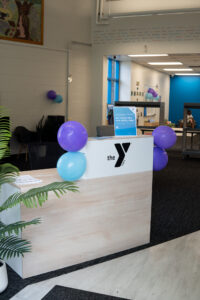 Located inside the former Chapelle Elementary School at 111 S. Wallace Blvd., the center officially opened June 1 and offers programming built around four pillars: physical and mental wellbeing, youth development, community, civic life and belonging and arts and humanities.
For James Highsmith, president and CEO of the Ann Arbor YMCA, the project is less about opening a new facility and more about creating a neighborhood-centered gathering place.
“Our role here isn’t to bring Ann Arbor to Ypsilanti,” Highsmith said. “It’s to show up as a committed neighbor, listen to the needs of the community and build something that grows with and for the people who call this neighborhood home.”
Bringing the Y into the neighborhood
The decision to locate the initiative in Normal Park was intentional.
“The former Chapelle Elementary School sits bordering Normal Park and that mattered more than convenience,” Highsmith said. “We wanted to remove the friction of getting to the Y and instead bring the Y to where people already are.”
The YMCA already had an established relationship with the building through a childcare program previously housed there and through its partnership with Ypsilanti Community Schools, which leases space at Chapelle.
“We already had a relationship with YCS who leases space at Chapelle and continuing that relationship was meaningful,” Highsmith said.
RELATED: No Place Like This Place: Ann Arbor’s YMCA
The building’s history also played a significant role in the decision.
“The building already held meaning in the neighborhood and has been a place families brought their children for years,” he said. “Reusing it lets us honor that history instead of erasing it, while giving the space new purpose.”
Highsmith acknowledged that the closure of the previous childcare program earlier this year was difficult for families and staff.
“The closure of the prior child care program at this site was a real loss for the families and staff who built their routines and relationships around it,” he said. “We’ve tried to honor that transition carefully rather than treat it as a footnote.”
More than a traditional YMCA
Unlike a traditional YMCA branch, The Neighborhood Collaborative is not centered around memberships or fitness equipment.
“The Neighborhood Collaborative isn’t a satellite gym and it isn’t built around a membership sales goal,” Highsmith said. “There’s no membership requirement to participate. Access runs through punch cards and single-visit passes instead and many of the programs have no cost at all.”
The center operates as a flexible program hub where residents can attend activities without committing to recurring membership fees.
“The punch card model removes the all-or-nothing barrier of a membership,” Highsmith said. “Families who can only commit to occasional participation or who want to try something before committing further, aren’t locked into a recurring cost.”
He added that the model is also intended to challenge assumptions about who belongs in community spaces.
“It removes the assumption that you need to be a member to belong in the space,” he said. “You can walk in, use a punch card and participate fully without ever joining anything.”
Removing barriers to participation
To introduce residents to the new center, the YMCA is offering five free group exercise classes for a limited time.
According to Highsmith, the promotion is designed to remove common barriers that often prevent people from trying something new, and recommends checking out the website for special offers.
“This offer is intended to remove the very first barriers to walking through the door: cost, uncertainty and unfamiliarity,” he said.
He added that the YMCA wanted the experience to be as accessible as possible.
“We wanted the first encounter someone has with the Collaborative to have zero cost and zero commitment attached, so the only thing standing between a neighbor and the space is curiosity.”
The facility’s location along an AATA bus route also helps improve accessibility for residents throughout the area.
Programs designed for long-term impact
The first phase of programming includes group exercise classes, CPR and First Aid certification, diabetes prevention programs, meditation, nutrition education, senior social clubs, before- and after-school care, Camp New Heights, babysitter certification courses and Spanish language classes.
While group fitness and youth programming may serve as entry points for many residents, Highsmith believes some of the center’s greatest impact may come from programs that produce long-term benefits.
“Group exercise and before- and after-school care are the front door for us,” he said. “They’re the easiest entry points and the ones most families will encounter first.”
However, he said programs such as diabetes prevention and CPR certification can have ripple effects throughout the community.
“A CPR-certified neighbor can save a life in an emergency,” Highsmith said. “The Diabetes Prevention Program addresses a chronic condition that carries enormous long-term health and financial costs. Nutrition education compounds over years, not weeks.”
The center’s wellness offerings were developed based on needs commonly seen across communities, but Highsmith said the YMCA is intentionally avoiding assumptions about what Ypsilanti residents need most.
“This is a question we’re answering through listening rather than assumption,” he said. “The specific mix that Ypsilanti residents most need will come from listening.”
Building with the community
Future phases of the Neighborhood Collaborative could include dance, martial arts, youth sports, tutoring, ESL classes, music programs, voter registration drives, community gardening and career readiness programming.
What ultimately gets added, however, will depend heavily on community feedback.
“Our listening to the community is ongoing,” Highsmith said. “The Collaborative’s buildout is phased intentionally so that later phases can reflect what we hear, not just what we planned at launch.”
Residents will be encouraged to provide feedback through surveys, conversations with staff and participation in existing programs.
“We see this as an ongoing conversation, not just our initial survey,” he said.
That philosophy is central to what Highsmith means when he talks about being “a committed neighbor.”
“It looks like presence before programming,” he said. “It means showing up consistently, listening before prescribing solutions and being honest when something is still being figured out rather than presenting it as finished.”
He said that approach also means recognizing the strengths that already exist within Ypsilanti.
“Normal Park and Ypsilanti are incredibly strong and vibrant already,” Highsmith said. “We are playing the part of a neighbor, not an unneeded savior.”
A place for every generation
The Neighborhood Collaborative’s four-pillar structure was designed to serve residents at every stage of life.
“The four-pillar structure spans age groups by design,” Highsmith said. “The aim is a building where a grandparent, a parent and a child could each find something built for them, often on the same day.”
Youth programs, wellness classes, arts programming and civic engagement opportunities are intended to create a space where families can build lasting relationships with both the facility and one another.
“A single hub can lower the activation energy for a family to access health resources, meet neighbors and find opportunity for their kids because it’s literally within the neighborhood, it’s familiar and it doesn’t require a financial commitment up front,” Highsmith said.
Measuring success
As the center grows, YMCA leaders say success will be measured by more than attendance numbers.
“We expect to measure success across participation and retention in current programming, the diversity of ages and needs served under one roof and most importantly whether the phased buildout actually reflects what our listening and survey surfaces,” Highsmith said.
For now, he hopes people understand that the Neighborhood Collaborative is not a finished product, but an evolving partnership with the community.
“The Neighborhood Collaborative is meaningful precisely because it’s still being built with the community, in real time, rather than delivered to it as a finished product,” Highsmith said.
“That might be a more difficult story to tell than a triumphant launch story, but it’s the true one, and it’s the one consistent with what the Y actually stands for: caring, honesty, respect and responsibility.”


