
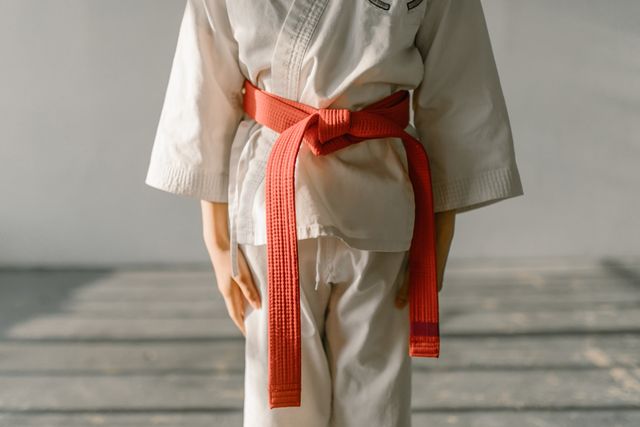
Karate and kids go well together! In the western hemisphere the term karate is often used to describe any form of martial art. Strictly speaking though, karate is a type of martial art native to Okinawa. There are many popular martial arts from other places too, like Chinese Tai Chi and Qi Gong, Korean Tae Kwon Do and Hapkido, as well as Japanese Judo and Jiu Jitsu. Both Tae Kwon Do and Judo are official Olympic sports, so devoted students could become Olympic medal winners one day!
Bullied no more
Bullying is a fact of life for many kids. If they feel threatened and cannot confidently speak up for themselves, they may get upset.
When someone learns martial arts, they build self-confidence and recognize that it is the bully that is weak and not themselves. Knowing how to safely defend against attack and respond with appropriate levels of physical resistance with martial arts techniques eliminates bullying. Now, your kid can focus on what youth is for: learning and making friends!
Getting physically fit
Children have abundant energy. However, addictive touch-screen devices have captured their attention. Now, too much free time is spent stagnantly absorbing dopamine instead of playing outside like their parents and grandparents did when they were young. Children’s health is paying the price for this shift from active to passive.
Childhood obesity rates have climbed steadily upward in recent years. Moderate physical activity, like martial arts, burns off excess fat, and exercise naturally suppresses appetite!
Making friends
Spending time together is a great method for building lasting relationships! Attending martial arts classes gives kids opportunities to meet other kids that may go to different schools or live in different neighborhoods. Now, with martial arts, they have something in common from which to build friendships.
They can practice together at each other’s houses on the days they do not attend class. For children of the same age, this practice time can be easily extended into helping one another with homework. Does your kid or grandkid need a new friend? Martial arts might be how they do it. My daughter met her husband that way!
Setting and reaching goals
Good things take time to build. Martial art belt ranking systems give kids a tangible sign of success! I remember when I was a white belt – a beginner – and what it took for me to earn a yellow belt in Tae Kwon Do. It helped me to understand what it took to study something and excel at it. Each block, kick, and strike reinforces self-discipline and creates the state of mind needed to learn and focus for an extended period of time in order to reach a goal. This skill is transferable to other areas later in life, like graduating college.
Learning good behavior
Many martial art schools participate in intramural and/or open tournaments. This offers kids the chance to showcase their skills in a public setting. They learn that not everyone wins every time, but if they stick with it, they too can earn a trophy or a medal. It demonstrates that someone’s victory is not necessarily someone else’s defeat. Shortly after I earned my blue belt, I competed in an open tournament sponsored by my home karate school. I won second place in free sparring (fighting) and third place in form patterns (an orchestrated series of moves). The competitors that outperformed me earned their trophies. I was good. They were better. And that was okay. I was happy for them and for myself.
Spending quality time with family
I have spent thousands of hours practicing martial arts in my lifetime. Hundreds of those hours were spent with family: two of my brothers, both of my parents, my wife, our three kids, and one of my nephews. Four of my family members earned their black belts! I am thankful to my brother for introducing me to Tae Kwon Do, and to my parents for paying for it, when I was fourteen years old. It became a healthy and wholesome lifelong interest. I went on to earn a 4th degree black belt, eventually opening a Tae Kwon Do school with my wife, a 3rd degree black belt in her own right. We spent many an evening or Saturday morning participating in class together. It was time well-spent! Maybe there are members of your family that you would like to learn martial arts with?
How to get started
Begin by watching a class or two at a local martial arts school. Some local options include Japanese Martial Arts Center or the Meri Lou Murray Recreation Center. Reputable schools allow potential new students to watch before they sign up. Some schools may provide the first lesson for free. Be wary of paying up front for a “black belt program” as only about 10% of students study long enough to get their money’s worth and earn a black belt. Then, consider how much time is available. To learn martial arts effectively, it takes at least two classes per week over several months, perhaps years. I attended 90-minute classes 3-4 times a week for a year to earn my first black belt. My brothers, wife, and nephew did the same.
Costs and caveats
Beware that there are hidden fees when it comes to studying martial arts! Yes, there is the monthly charge which can be $50-$200 per month, per person, and require signing a lengthy contract. There are also the costs of uniforms, belt tests, tournaments, seminars, and optional private lessons or special classes (e.g., weapons). These add up quickly to hundreds of dollars, per person. Shop around before you sign a contract!
RELATED: No Place Like This Place: Ann Arbor’s YMCA
Tae Kwon Do is the best activity I have ever done! It gave me confidence and helped me build strength and character, and those are valuable lifelong skills. Give martial arts a try today with your friends or family. It just might become your favorite activity too!


