
Table of Contents:
- Letter from the Editor
- Packard Health’s New Healing Brothers United Program supports the Mental Health needs of local Black Men and Boys
- What to know about having a support animal in Ann Arbor
- Ann Arbor Public Schools Join National Lawsuit Against Social Media Giants
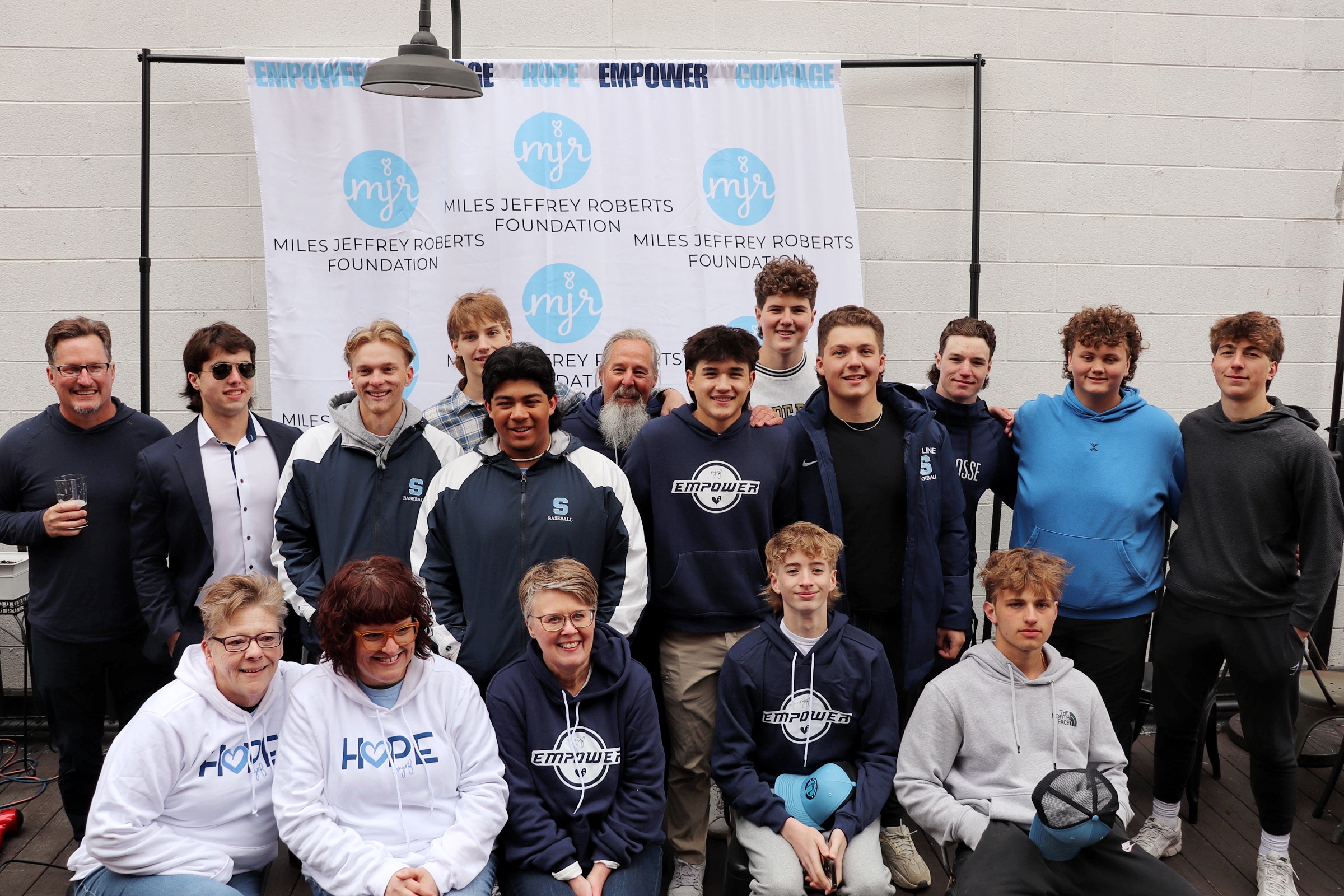
- Connecting within the Community: MJR Foundation promotes mental health awareness at AAPS high schools
Letter from the Editor
Mental health challenges affect young people across the county. In this year’s Mental Health Guide, we cover the network of people, policies and efforts that surround the Ann Arbor community. We spoke with local experts and advocates working to expand access and strengthen mental health resources for youth.
We highlight local programs and organizations such as the Healing Brothers United Program, Therapaws and the Miles Jeffrey Roberts Foundation—each with a distinct focus, but all working toward the shared goal of improving mental health. We also provide an update on a lawsuit involving social media and mental health that local districts have joined.
Read on to learn more about the resources available to youth and families in the Ann Arbor area that are struggling with their mental health.
Thank you for reading,
Mary Genson
Assignment editor
Packard Health’s New Healing Brothers United Program Supports the Mental Health Needs of Local Black Men and Boys
By Supriya Jalukar
What is the Healing Brothers United (HBU) Program?
Despite the rising awareness of mental health needs and an increase in available support resources available today, many individuals still struggle to access resources or feel ashamed to do so. Black men, in particular, face unique challenges in seeking support. Packard Health’s new initiative, the Healing Brothers United (HBU) program targets this need, filling a key void within our community.
HBU is a community-based initiative aiming to address the mental health needs facing black men and boys living in Washtenaw County. The program’s vision is to create a world where all black men and boys thrive, are supported, have the space to embrace their individuality and share their unique experiences with the world.
Santinio Jones, MBA, Behavioral Health Program Manager, and members of HBU’s core program team, share insights about this new initiative.
Healing Brothers United Program origins
Launched in 2024, Packard Health’s HBU program is rooted in a grant-funded initiative. Back in 2021, Dr. Raymond Rion, Executive Director at Packard Health and Corey Telin, Director of Behavioral Health realized that young black men were not coming into the clinic for mental health related needs, except in crisis situations. Jones was hired as a coordinator after a collaboration was initiated between Packard Health and kNEWjoy, a non-profit organization founded by Dr. Daphne Watkins, a professor at the University of Michigan which supports young-adult-serving organizations to promote wellness programs.
Jones is personally invested in the HBU program’s vision. “Getting black men to show up regularly is a major milestone for this work. Life happens. Showing up regularly is a major indicator for commitment.”
With a background in business, Jones also recognizes the important role of education as a driving force out of poverty. He hopes that through HBU’s program, he is able to empower young men to take their mental health into their own hands, and feel safe enough to seek support. “My long term vision [for HBU] is to continue to have the ability to make our programming sustainable and expand or branch out to different communities.” Currently, the program’s focus is on the local Washtenaw county population.
Healing Brothers United’s core team
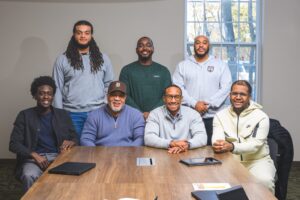
The HBU team is composed of six mental health ambassadors, led by Jones, who serves as the program manager. The team includes Brandon Bond, Christopher Okine, Mike Hearns, Justin Harper, Gabryel Shephard and Jon Williams. Bond and Okine are part of the leadership team, while Hearns, Harper, Shephard and Williams joined the team in 2025.
HBU’s mental health ambassadors are embedded in the local community. Their roles range from conducting community outreach to raise awareness about mental health issues, facilitating workshops, seminars and groups on mental health topics, providing peer support and guidance, advocacy for equitable access to mental health resources and collaborating with local organizations and healthcare providers.
Justin Harper currently serves as one of HBU’s mental health ambassadors. Harper’s teaching background has shown him the value of education in fostering emotional development, social skills and confidence building skills in youth. Harper’s “goal is for HBU to be present in schools, neighborhoods, and community spaces where support is needed most, helping to close critical gaps in mental health awareness and access… By having an organization like HBU embedded in different areas of the community, we can strengthen relationships, build unity and help reduce the negative stigma surrounding mental health.”
Brandon Bond, who has been involved with HBU since 2024, shared that the HBU team is, “committed to co-creating non-monolithic solutions that reflect the fullness and diversity of black male experiences…we’re intentionally building a culture where all black men and boys can contribute in meaningful and authentic ways….”
Christopher Okine, another one of HBU’s lead mental health ambassadors, is currently a medical student at the University of Michigan. His vision for the HBU program is to, “spark a conversation and a perspective change on black men and boys in our community. [He sees] HBU becoming a hub for Black men to explore their mental health through therapy, focus groups, and collaborations with other organizations.” As Okine shared, the presence of safe spaces for black men to express their feelings is truly rare.”
Contact
Individuals interested in learning more about the HBU program may reach out to [email protected] or connect with the team on instagram. Interested in volunteering with HBU? Fill out the connection form.
What to Know About Having a Support Animal in Ann Arbor

By Noura Costany
Support animals can make such a difference in someone’s life. Some support animals help with guiding those with blindness or vision impairment, while others alert their pet parents during an emergency. For example, if you’re diabetic and have low blood sugar, a support animal can alert you by recognizing changes in your body.
There are different kinds of support animals such as service animals, emotional support animals, therapy animals, and crisis response animals. These animals are all trained differently.
Emotional support animals help people calm down and can be really helpful for people with anxiety, those who need additional comfort, and more. Crisis response animals are meant to help during a crisis situation, such as a hospital stay, first responder event, or high stress situation.
Often, these animals are dogs since they are the easiest to train, but others prefer a smaller animal that they can bring with them all the time, such as a cat or rabbit, and horses are actually very popular as well. Service animals are specifically recognized by the Americans with Disabilities Act, and it is considered discrimination to deny someone access to their animal.
Ann Arbor and support animals
You need to get your dog a license in general in Michigan, but if you have them certified as a service animal first, Ann Arbor will give you that license for free after you fill out a simple application. In order to qualify, you would need proof that you had a physical or mental health disability as well as a dog that had been trained to perform a dog or task that assists with that. Usually, one would need a doctor’s note about your disability and proof of training.
According to the service dog registration website, in Michigan you would need the following:
“Service dog registration involves listing your service dog in a database, which typically provides you with an identification card, a certificate, and sometimes, service dog accessories like vests or tags. This form of registration is designed to help the public and authorities quickly recognize the status of your service dog.”
Therapaws
Not all service dogs are full time. For example, Therapaws brings therapy dogs to hospitals, schools, libraries and events to foster mental health support. This started out at the University of Michigan Hospital (and in fact was something I experienced when my daughter was in the NICU) and has expanded to what it is today. This is a Washtenaw County based company with over 120 teams that can help support people in need.
If you’re looking to buy a service dog, one resource is Canines for Change. You can apply for different types of service dogs depending on your needs. Since service dogs can cost anywhere from $20,000-$40,000 dollars, they do help reduce the cost and teach you how to fundraise as well.
That is a steep price, so another resource is MDT, Michigan Dog Training. They work to help train your dog, but it is a bit more limited as to what they can do. Their focus is on Mobility assistance, PTSD, Hearing and diabetic assistance.
Resources
Ann Arbor is a great place to live, and many places are very dog friendly in general. The University of Michigan has an entire page about its support of service dogs, and I’ve seen different service animals out and about (including a chicken). In general, Ann Arbor facilities and restaurants will follow state law, and you can learn a little more about that using the following resources:
If you see a service animal in the wild, be sure not to pet it since it’s doing an important job. Not all of them wear vests, so it’s important to give people the benefit of the doubt when you see an animal in a place you might not normally see one. I know a few people who rely on their service animals, and it’s amazing how much they improved their lives. Hopefully there will be even more resources for those that need them in the future.
Ann Arbor Public Schools Join National Lawsuit Against Social Media Giants

By Donna Iadipaolo
The Ann Arbor Public Schools (AAPS) Board of Education unanimously (7-0) voted to join a growing national lawsuit against major social media companies at a recent meeting. The AAPS now joins a widening legal and cultural battle against social media companies over student mental health and digital platforms involving hundreds (even thousands) of school districts nationwide.
At the AAPS Board meeting, trustees approved participation in a multi-district federal case that alleges companies behind platforms like Facebook, Instagram, TikTok and Snapchat have knowingly designed addictive products that harm young users and hurt their mental health.
The suit alleges that these platforms are designed to be addictive and contribute to the following mental health problems:
- Anxiety
- Depression
- Cyberbullying
- Self-Harm
Some said at the board meeting that these companies all target students during the school day, interfering with their learning.
“Currently, we’ve got these entities like Snapchat, TikTok, Facebook, Instagram, you name them, constantly bombarding children during the school day with notifications that are a huge distraction from their learning,” Board member Schmidt said at the meeting. “It has had impacts on schools, whether it’s student mental health, the fact that students may not be achieving what they could achieve.”
Research underscores the scale of the problem presented by the platforms’ ineffective age verification, warnings, parental controls, and reporting of child sexual abuse material. Findings presented by the Social Media Spread of Hate (SMASH) Project:
- 53% reported using social media more than five hours per day, with 20% reporting nine hours or more;
- 46% reported being victims of cyberbullying;
- 81% reported exposure to hate speech, often related to race, gender, or religion;
- Students also reported exposure to drug-related content, eating disorder content, and sextortion schemes linked to self-harm and suicide.
Other area schools that are joining the suit include Dexter Community Schools and the Detroit Public Schools system. These districts join hundreds of school districts, cities, counties and state attorney generals across the country pursuing legal action to hold social media companies accountable for the harm their platforms have inflicted on children.
“I believe that based on the information that we received, I know that social media companies are really targeting our students during the school day when they should be focused on learning,” Board Vice President Glynda Wilks said at the meeting. “And I believe that these companies are actually targeting them at specific times, specifically during the school day, which is definitely unacceptable.”
Ann Arbor joins hundreds of districts nationwide pursuing legal action against social media companies. The lawsuits argue that platform design—particularly algorithm-driven engagement and infinite scrolling—has contributed to rising rates of anxiety, depression and behavioral disruptions among students.
Lawsuits may be a way to force companies to change their behavior financially.
“The way I think that you really hit a company and get them to stop doing something is not to put the phone in the pouch, but it’s to hit them in the pocketbook. And so if we’re able to get these companies to realize that they should not be targeting our students and that, in fact, they’ll have to pay monetary damages for it, then I think it’s probably the best way to address the underlying issue,” said president of the board Torchio Feaster.
District leaders emphasized that the decision was not taken lightly but rather reflects years of growing concern among educators.
The lawsuit seeks financial damages to offset increased costs schools have incurred, including expanded counseling services, behavioral interventions and staff training.
What board members said
During the meeting, board members repeatedly pointed to firsthand observations in schools:
- Students are struggling to disengage from devices during class
- Increased incidents tied to online conflict spilling into school environments
- Greater demand for mental health support services
Many believe this issue is an urgent public health concern, and schools are on the front lines of something they didn’t create for social media. They argue that social media companies bear the brunt of the responsibilities.
No upfront cost to the district
AAPS officials noted that the legal action will be pursued on a contingency basis, meaning the district will not pay upfront legal fees. This structure made participation more feasible and reduced financial risk.
Broader implications
The case Ann Arbor is joining is part of a consolidated federal proceeding that could have far-reaching implications for how social media companies operate—particularly with respect to minors.
Legal experts say outcomes could influence:
- Platform design standards
- Youth safety regulations
- Financial liability for tech companies
For Ann Arbor educators, however, the issue remains grounded in day-to-day reality.
Community conversation likely to continue
While the vote itself was unanimous, the broader conversation around student technology use is far from settled. The district’s decision may spark further dialogue among parents, educators and students about digital habits, responsibility and regulation.
For now, AAPS has made its position clear: the impacts of social media are no longer just a family or individual concern—they are a systemic issue schools are being forced to address.
AAPS did not file a standalone case; instead, it joined MDL No. 3047, a federal multi-district litigation, in a nationwide suit against social media companies.
Connecting Within the Community: MJR Foundation Promotes Mental Health Awareness at AAPS High Schools
By Mishal Charania
Miles Jeffrey Roberts was his “best self when he was on a team,” his parents Jeff and Kristen Roberts said.
As a student athlete, Miles thrived when he was competing with and against his peers.
In 2017, when he died by suicide as a freshman at Skyline high school, with the outpouring of support his parents received from the Ann Arbor community, they founded the Miles Jeffry Roberts Foundation.
“We lost Miles […] we were devastated but knew our story, his story, was going to be one that could really impact and really be life-changing for others. And so that’s the spirit of who he was,” Kristen Roberts said.
Jeff and Kristen Roberts serve as the Chief Operations Officer and Program Development Director for MJRF. The Foundation supports the mental health of student-athletes at Ann Arbor Public High Schools through various programs from partnerships with U-M Depression, donating funds to developing a middle school and high school peer-to-peer programs, hosting panels for suicide prevention and mental health education for high school student-athletes.
“We’re really grateful that we get to honor him in different ways and help other kids who were like him, that are like him,” Kristen said. “We want to help others, so that’s really been the mission driving as we’ve moved forward.”
MJRF has since worked with Ann Arbor Public Schools to develop the Mental Health Champions program or “Champs,” which is an opportunity for figureheads such as teachers, counselors and students to collaborate in delivering informed presentations about mental health awareness to athletes. A Champ works to connect students with outside resources, such as mental health workers or initiatives that AAPS is facilitating.
The Champs program has expanded strategically to reach over 1,600 athletes with more than 60 presentations across all three major high schools. MJRF Champs Program Director and Clinical Therapist Melissa Schmidt’s goal is to position the Champs as people within the school setting that students feel comfortable reaching out to about mental health.
“Students nowadays are very emotionally in tune, and they’re really starting to talk about things that were never talked about before,” Schmidt said. “We’ve had multiple students ask for us to come to [sports] teams, […] wanting to be student volunteers with our program, lighting that fire, engaging with them [and] encouraging their support. Which also takes it back to the Champs, that work so hard to just form those connections, to show passion, to keep an open door kind of conversation of ‘this isn’t something we should hide, this is something that should be out there.’”
This partnership was developed from the support of Bill Harris, a friend of the Roberts family and former long-time employee of the Ann Arbor Public Schools administration. Now, Harris serves as the Vice President of the MJRF Board.
“The power of the team environment, [is] that they’re already coming together for a common purpose,” Harris said. “There’s a level of trust, openness and dependency on one another. It’s what creates an additional and, arguably a special opportunity, for student athletes to hear messages in ways that they may have or may not have heard before from a health class.”
Students have gotten involved in a variety of ways, with work being done alongside the Champs and within the broader community. AAPS student Jude Carlson leads the annual “Mullets for Miles” fundraiser now in its 3rd year, and graduating seniors who show an interest in promoting mental health wellness and suicide prevention can be awarded a memorial scholarship in Miles’ honor.
Beyond their current programming, the team is working to expand to facilitate similar outreach to other major activity groups such as musical and performance arts, robotics and more within AAPS, and other Washtenaw County schools.
“I can feel the excitement and the energy that the students are giving off as a result of this program,” Jeff Roberts said. “It is very clear that they are thirsty for the conversation. They are excited that we’re taking time to speak to them about their specific health, their abilities, their skill sets, and then that gets coupled with the value of helping each other, which is a theme in humanity that will never go away. It feels good to help others. And I feel like they’re, they’re doing that.”
The local community continues to support Kristen and Jeff, with MJRF receiving grants from Washtenaw County Community Mental Health and Ray and Mary Knight Foundation, helping fund the work that MJRF does. MJRF continues to facilitate larger and individual conversations through a variety of initiatives.
“The number of parents who have come up and said, ‘thank you so much for what you’re doing, my son or daughter came home from school and started talking to me about mental health, started chatting me up about what they learned in the presentation’ is heartwarming,” Jeff Roberts said. “The ability to speak about how they feel, about what they see in themselves, what they see in others, and that’s heartwarming, and it’s clearly demonstrating that the kids are taking this in and using it on a daily basis.”
Learn more about the Miles Jeffrey Roberts Foundation by visiting their website, Instagram and Facebook.


