Table of Contents
- Letter from the Editor
- Healthy After School Snacks
- Bus safety and ettiqutte
- Approaching school with Food Allergies: Your Child’s or their Classmate’s.
- The Middle College Crash Course: Conversations with Alumni of ECA and WTMC
Letter from the Editor
Looking back, I always remember back-to-school time to be so bittersweet. Part of me was always sad that summer was over, but the other part was ready to jump back into routines and see my friends everyday at school.
Going back to school can come with a mix of emotions for kids of all ages. It often means meeting new people and adjusting to new schedules. In this guide we include a variety of helpful resources for kids K-12 who are getting ready to go back to school in the fall.
Thank you for reading,
Mary Genson
Assignment editor
Strategies for Calming Back-to-School Anxiety
By Mary Rose Kulczak
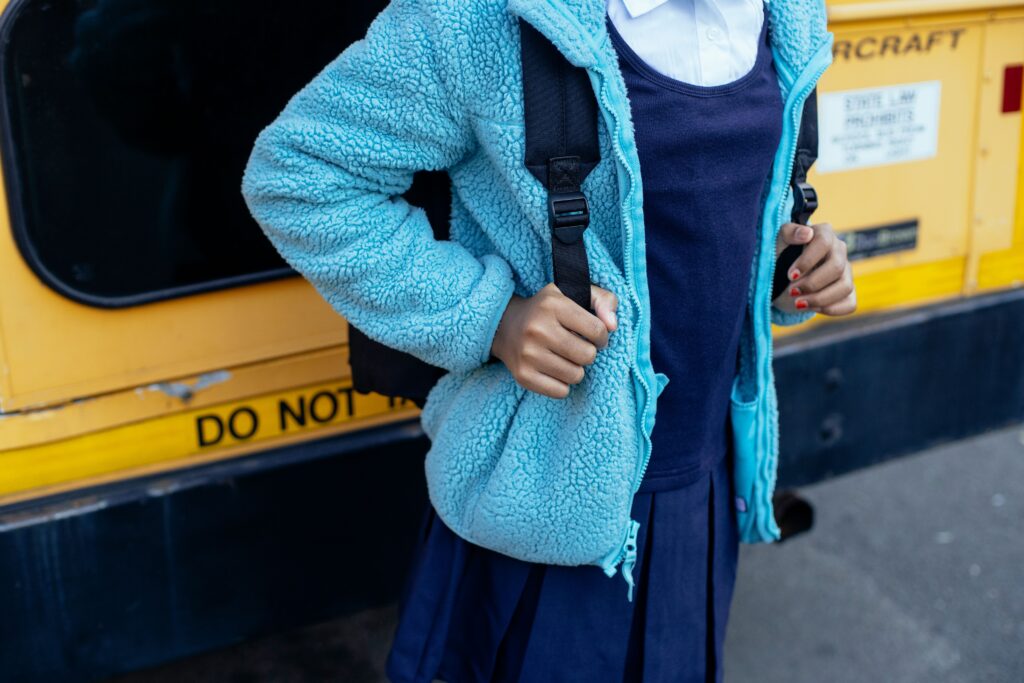
Back-to-school time can be a time of excitement and anticipation, as school children look forward to reuniting with friends. But it can also be a time of anxiety for many soon-to-be students. New teachers, new school buildings, new experiences. From pre-school ages to high school stages, this anxiety can creep in as they head in to a new academic school year.
“Back to school anxiety can show up at any age, although it is more common with transitions such as starting kindergarten or starting at a new school,” Nina Banozic, LMSW at the University of Michigan Mary Rackham Center, said. “Children’s school related anxiety can be connected to various concerns, such as separation from parents, social dynamics or academics.”
What signs should a parent look for? Banozic said that anxiety in children can present itself in the following ways:
- sharing worries about returning to school
- asking for reassurance more than usual
- clinging to parents
- trouble sleeping
- avoidance of certain situations
- exhibiting more disruptive behaviors than usual
“Anxiety can also present with physical symptoms, such as complaints like stomach aches or headaches leading up to school starting,” Banozic said. ” It is important to rule out any medical concerns as well.”
Strategies for Success
What strategies can parents employ to ease children back into the rhythm of a new school year?
“There are many things that parents can do to help children with the transition to a new school year,” Banozic said. A few to consider:
Keep it consistent
“Practicing morning and evening routines for a couple of weeks before the school year. This includes returning to a sleep schedule that will be similar to that during the school year.”
Talk it out
“Validate your child’s feelings, such as telling them ‘I know you are nervous about the school year starting.’ Express your confidence in their ability to do so, such as ‘I know you can do it.’”
Plan a visit
“If your child expresses higher anxiety around school or is starting a new school, you can visit the school before it starts and/or coordinate a time to meet the teacher. Previewing can be helpful for some children.”
Consider a helpful take-along token
“You can provide your child with a transition object, such as a photo or small item, to take with them to school to feel connected.”
Some parents may unwittingly project their own worries and concerns which their child may be picking up on. Banozic reminds parents to monitor their own behaviors and keep their own emotions in check.
“Make sure you take care of yourself and your own emotions as well. Children look to adults for cues, so modeling calm and confidence can help!” she said.
Finally, check with your child’s school to see if they offer preview days for new students. Visit the school, walk the hallways to get acclimated to the layout, and stop in to the child’s classroom. Find the cafeteria, the gym, the library and the playground. Some schools may even offer the chance to walk onto a school bus. With a little preparation, parents can make sure that the start of the new school year is a positive one for the entire family.
Healthy After School Snacks
By Mary Rose Kulczak

After a long day of learning, kids come home with full backpacks and empty stomachs, ready to eat the first thing they can grab. It’s always a good idea to have a pantry and fridge filled with easy-to-assemble healthy snack options that will hold off the hangries until dinner time.
Go-to snacks from local families
We asked our social media friends for some of their family’s favorite go-to snack options.
Nina Reid said, “I’m a plant-based chef and work very hard to add more plant-based foods into my grands’ diets. My grandson loves burgers, so I created a jackfruit slider recipe and he loves them, and so does my son. Super easy to prep and make. I make a whole batch and freeze them and pull them out and grill them. They also love crunchy veggies. They will eat almost any veggie raw. Cooked corn ribs with Tajin.”
Christen Mitchell, “On hot days, my kids loved frozen green beans.”
Jennie DeVries said, “Fruits, blueberry muffins, banana bread.”
Amy L. Hafner -Lavigne, “Half a sandwich with veggies and fruit. Since kindergarten, my second grader loves cucumbers cut into rounds and lightly peeled, grapes, blueberries and Goldfish crackers. Sometimes mixing it up with a beef stick and yogurt covered pretzels. Pretzels go well as a snack also.”
Tiffanie AH said, “Any fruit, fruit salad, cucumbers, peppers, celery or carrots with hummus, pumpkin bread, tabbouleh and pita, and yogurt with granola and berries.”
Martha Grossman said, “Great snack options that my mom had for us kids: saltines with peanut butter, apples, bananas, peanut butter and honey on whole wheat toast, cinnamon and sugar on whole wheat toast, and popcorn.”
Annette Zuber Urgan said, “English muffin pizzas. The kids love putting on toppings. Ants on a log: celery filled with peanut butter and a few raisins on top.”
Miere Duarte said, “My son really loves omelets.”
Linda Ward Spina said, “Smoothies, popcorn, fruit.”
Meg Kim said, “My kiddos love cheese, pepperoni, crackers and berries, and the trail mix we buy in bulk at Costco.”
Mallory Anderson said, “This is when peanut butter comes out since we have no allergies at home, and fruits because no sugar boosting before bedtime.”
Ariana K. said, “Carrots and hummus.”
Robin S. said, “Ramen, grilled cheese, English muffin with butter and jelly, bagel and cream cheese, hot dog and beans.”
Nonni Cole said, “Rice cakes (plain or chocolate) with chocolate hummus and sliced bananas on top!”
Rhonda M. said, “My daughter is obsessed with the small cucumbers. She’s eating about a bag a week. She also enjoys yogurt covered raisins from time to time.”
Miko Fossum said, “My son loves mixing a cup of tahini (ground sesame paste-super high in calcium) in a bowl with a teaspoon or two of honey. He then spreads or drizzles it over slices of apples or banana halves. Super nutritious and delicious! Another thing to do with tahini is mix it half and half with some ground or powdered almonds, and some honey to taste. Press it into a shallow pan and chill it. When cut into small slices, it tastes kind of like the bit-o-honey candy from our childhood.”
Bus safety and ettiqutte
By Isha Savi
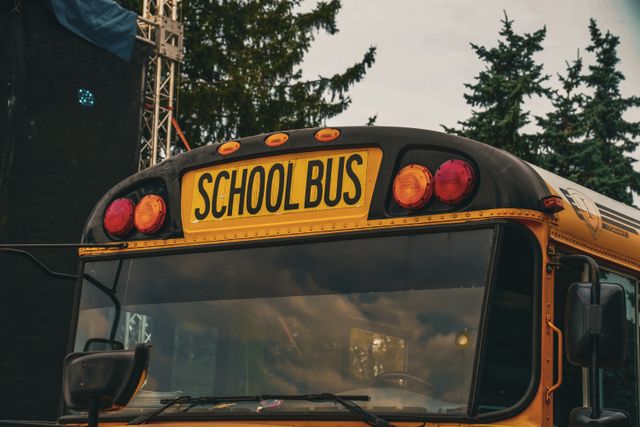
On May 23, FOX 2 Detroit reported on a close call accident involving a middle school student in Milan coming off of his bus home, and a driver who ignored the extended stop sign. Many readers commented on the incident, sharing concerns about the safety of the child as well as the legal repercussions of the act. In Ann Arbor Public Schools, nearly 5,000 students ride the school bus to and from school. With school currently out for students, it is important we take the time to better understand bus etiquette and laws for the safety of the students in our community.
School bus drivers take many steps to alert drivers of their stops. To start, the bus will have its yellow overhead lights flashing, indicating to drivers to prepare to stop. It will then extend a stop sign. Drivers must stop at least twenty feet behind the bus unless they are driving the opposite direction on a divided highway. Drivers should also note crossing guards, safety patrols, playgrounds and residential areas as indicators to slow down. This way, students can get on or off their bus safely with peace of mind.
If a driver does not stop for a school bus, there are a few consequences that can be enacted. Firstly, the driver can receive a $100-$500 civil fine, along with three points added to their licence. As well as this, insurance companies may inflate their rate due to the higher risk of insuring them. There are also potential community service requirements to be fulfilled.
For parents, it is important to teach your students proper bus etiquette in order to keep them and their peers safe. For example, teaching them to always stay 10 feet from the bus until it’s time to get on, and to never stand behind the bus is of utmost importance. As well aS making sure they wait until the driver says they can get on or off will ensure their safety. Lastly, teaching them to be respectful and quiet when on the bus can make the bus driver’s ability to do their job certain.
School bus safety is a shared responsibility between everyone in our community. Parents, students and drivers should all understand Michigan’s school bus laws in order to prevent dangerous situations as children travel to and from school. Taking these precautions can help keep every student safe and make our roads more secure for everyone. To learn more about this topic, you can read MCL – Section 257.682 and the Michigan State Police’s page on bus safety.
Approaching school with Food Allergies: Your Child’s or their Classmate’s.
By Chelsea Devona

Allergies are becoming more and more common. Up to 1 in 13 students can have a food allergy.
If your child has a food allergy, you are likely already well acquainted with the worry that accompanies keeping your child safe. Or maybe your child doesn’t have a food allergy, but someone in your child’s class does, and you need to know how to help keep that child safe as everyone goes back to school.
If your child has a food allergy or intolerance, here are some ways to keep them safe as they return to school:
504 Plan. If it’s an allergy, request a 504 plan if your child will need specific accommodations.
Communicate with teacher/school nurse.
Whether your child has an allergy or an intolerance, schedule a meeting (or at least send an email) with your child’s teacher(s) and school nurse to talk to them about your child and concerns, including exposure protocols and rules about food.
Practice self-advocacy.
For allergies and intolerances, practice scenarios with your child where a friend offers them food and they have to ask questions about it or reject it. Peer pressure from friends is powerful. This will help prepare your child to stand up for themselves.
Go over their reaction.
If it’s an allergy, make sure your child knows how to recognize their symptoms and immediately communicate with an adult if they’ve been exposed. If it’s an intolerance but your child may still experience immediate distress or need to be sent home, this is still helpful.
Send treats.
There’s not much worse than being left out when your classmates are all getting a special treat and you have to just sit there. Make sure to always have a safe treat in your child’s backpack, or provide your child’s teacher with a stash of special treats.
If your child’s classmate is the one with the allergy:
Ask your child’s teacher if anyone in their class has food allergies, including the severity of the allergy. This should be something the teachers/school would communicate too, but it never hurts to be proactive.
Educate your child about food allergies, including safety tips like not sharing food with classmates and asking them if they have any allergies or intolerances. Not sharing food includes not sharing anything via mouth, including sharing drinks, utensils or chapstick with friends too.
Teach your child to wash their hands after eating to avoid spreading allergens.
Talk about bullying, as children can be teased for food allergies. Encourage them to stand up for their friend if their friend is ever being teased for their allergies, or to notify a trusted adult.
If your child is old enough, show them how to read food labels and point out common allergens, and relate the allergens to your child’s friend. E.g., “We love to eat peanut butter crackers, but it has peanuts in it, and (friend’s name) at school is allergic to peanuts. What would happen if we accidentally brought peanut butter crackers to school?”
Educate your child about the symptoms their friend might experience if they’re exposed to an allergen and how to notify a teacher or trusted adult.
The Middle College Crash Course: Conversations with Alumni of ECA and WTMC

By Antonia Brasher
To start, what is a middle college? The premise is similar to how advanced placement classes (AP classes) grant students the opportunity to earn college credits while still in high school. A middle college is a chance for students to take classes on a college campus and simultaneously earn high school and college credits with the same courses.
Students begin by taking traditional high school classes, then as they prove themselves to their teachers and advisors, they transition to taking on college courses. Students will find themselves as peers to those who have already graduated high school. However, unlike the college students they study alongside, middle college students attend for free.
Once students are in the college courses, they function like any other post-secondary student. High schoolers in these programs are responsible for getting to their classes on time, managing their course load, communicating with their professors, behaving professionally with adult students and in many cases selecting which classes they would like to take. By the end of their high school years many students earn their high school diploma alongside an associates degree.
It’s no small undertaking. But for many teens the added level of responsibility comes with a sense of autonomy and self-assuredness that benefits them into post-secondary and beyond.
Local middle college opportunities
Washtenaw County has two middle colleges that are fully set on the university campuses: The Early College Alliance at EMU (ECA for short) and The Washtenaw Technical Middle College (WTMC for short).
Unlike other middle colleges that are linked to specific high schools like Ypsilanti Community Highschool’s STEM program or Dexter Middle college, students in these programs take both their high school and college classes on the university campus. Before they even enter college classes, they are immersed in campus life. They are free to wander between classes, explore and have much more freedom than a closed high school campus.
These schools generally ask students to be “dual enrolled,” with a home district (typically the high school they originally would have attended) or to be coming from a homeschool setting. Students are able to continue with extracurriculars such as sports, theatre, clubs, dances, football games and graduations at their home district in addition to any activities they take on at their middle college.
The challenges of middle college
However, despite all of the advantages, potential financial savings, and skills that students learn, entering into college classes is no easy feat, or even a guarantee at all. Both ECA and WTMC treat the high school portion of their programs as a kind of trial period in which students must be “credentialed” by their instructors. Students must demonstrate strong academic skills and strong soft skills.
At WTMC students must earn Bs in their classes to move on. In ECA, credentials are largely to the discretion of instructors. However, a student credentialing without good grades is largely unheard of.
In addition to these standards, the high school classes are designed to be extremely rigorous.
As an alumnus myself, I was a straight A student all through ninth grade. My first semester of tenth grade… I wept tears of joy when I earned a 70 on a math test. It was my highest score all semester.
Another alumni recalled how many hours she spent studying per night, “It was so much. I had at least two to three hours of work a night.”
In both ECA and WTMC, faculty hold the belief that in order for students to succeed as college students at such a young age, they need to have practice with college level grading, critique, and workload.
“It kinda felt like overkill. Like all of my college classes have been easier. During that first year I was genuinely drowning. College classes felt like a breath of fresh air,” said Mars Lawerence an ECA Alumni class of 2021.
Building soft skills
The other piece of the puzzle on the journey to enter college courses is, of course, soft skills. College students have to learn how to run their own lives; teens hoping to study alongside them need to learn as well. Students are graded and given scores based on how well they take notes, how they organize their time, if they attend office hours and communicate with others.
They are provided detailed feedback on what they do well and how they can improve. Students are then expected to apply corrections. Many teachers actually rate soft skills as of higher importance than academic success. .
At the end of such an arduous semester finding out that they have succeeded feels like a victory, “The reward of being credentialed was such an amazing feeling and I felt like my work had finally paid off,” said Isobelle Brasher, an ECA Alumnus class of 2020.
Choosing a middle college
ECA and WTMC have the same bones. The programs share many core values, structure, and ambitions for their students. The two are different nonetheless. For those considering a middle college which to choose? Here are a couple of the make or break differences that might sway a family one way or the other:
- Washtenaw Community College is a much smaller campus than Eastern Michigan University. Students don’t have to worry about a walk any further than five to ten minutes. This might make it a better pick for students hoping to ease into the campus life.
- At ECA, post-credentialling students are required to take one college math class per year. At WTMC students are required to take one each semester.
- At ECA students take college courses from an accredited four year university. These are more likely to transfer to a high number of other four year schools than community college courses.
- Eastern Michigan University possesses things such as counseling services available to all students, larger gym facilities and all of the typical amenities of a four year school.
- WTMC offers access to things like trade apprenticeships, certificate programs and a larger variety of other career paths.
Attending a middle college is not a small decision. And with so many benefits, drawbacks arrive in turn. In order to make an informed decision it is important to discuss the things that students may be giving up.
As described by alumni, here are some of the largest pros and cons of ECA and WTMC as stated by program alumni:
Pros:
- “Coming straight from homeschool I had a bit of a disadvantage. But I gained a greater degree of independence. I was able to truly learn. I had an active and involved set of instructors. I was held accountable for my homework. I appreciated that I was able to jump into a middle college because I felt like I was respected and treated like a person,” said Lucy Lawrence, WTMC Alumni Class of 2024.
- “Teachers actually respect you,” said Mars Lawrence, ECA Alumni Class of 2021.
- “I had one advisor who worked closely with me for three entire years. Advisor course loads are pretty small so I got to know her pretty well and work with her on my goals. We worked as a team and managed to get all of my nursing school prerequisites completed before I even graduated high school. I was admitted to the school of nursing in my first semester,” said Isobelle Brasher, ECA alumni class of 2020.
Cons:
- “I feel like it’s a bit hard to have a tightly knit cohort when you’re scattered across an entire campus. And like maybe there’s one or two of you in each class. Everything is so spread out. When I was in public high school I knew everyone. In ECA I knew maybe a quarter to half the kids,” said Mars Lawrence, ECA Alumni Class of 2021.
- “Being on a college campus does mean that things are a lot more spaced out. You really have to manage your time to get to places on time,” said Lucy Lawrence WTMC Alumni Class of 2024.
It’s a complex decision. Middle colleges aren’t the right fit for every student or every family. We know that no two students are the same and that no two students ever experience school the same way.
While public schools continue to serve our communities and our students with excellence and compassion, middle colleges provide a place for those with a different timeline. For those students who seek extra challenges, want to transition from homeschooling or struggle in traditional public schools, programs like ECA and WTMC can be just the thing their academic careers were missing.
From campus tours, informational sessions, and a faculty ready to answer questions, these programs are ready and waiting for the students who need them!