
 In 2012, Brian Martindale was walking to the convenience store when a newspaper headline stopped him cold.
The photo showed a mother standing on a busy street corner, holding a handwritten sign that read, “My daughter is in kidney failure. Please help.” The girl was 10 years old. By the end of that day, Martindale had seen her story again on local television news. He decided to get tested to become a kidney donor.
More than a decade later, that decision has grown in Kidneys for Kids, a national organization advocating for living kidney donation. On June 1, Kidneys for Kids will launch its most ambitious effort yet, the Drive to 7000 campaign, beginning in Ann Arbor.

The campaign aims to inspire 7,000 living kidney donations in a single year, a benchmark that has never been reached before in the United States. The country typically averages between 6,000 and 6,500 living kidney donors annually.
“This isn’t just about hitting a number,” Martindale said. “It’s about breaking a psychological barrier and showing people that donating is possible, safe and life-changing.”
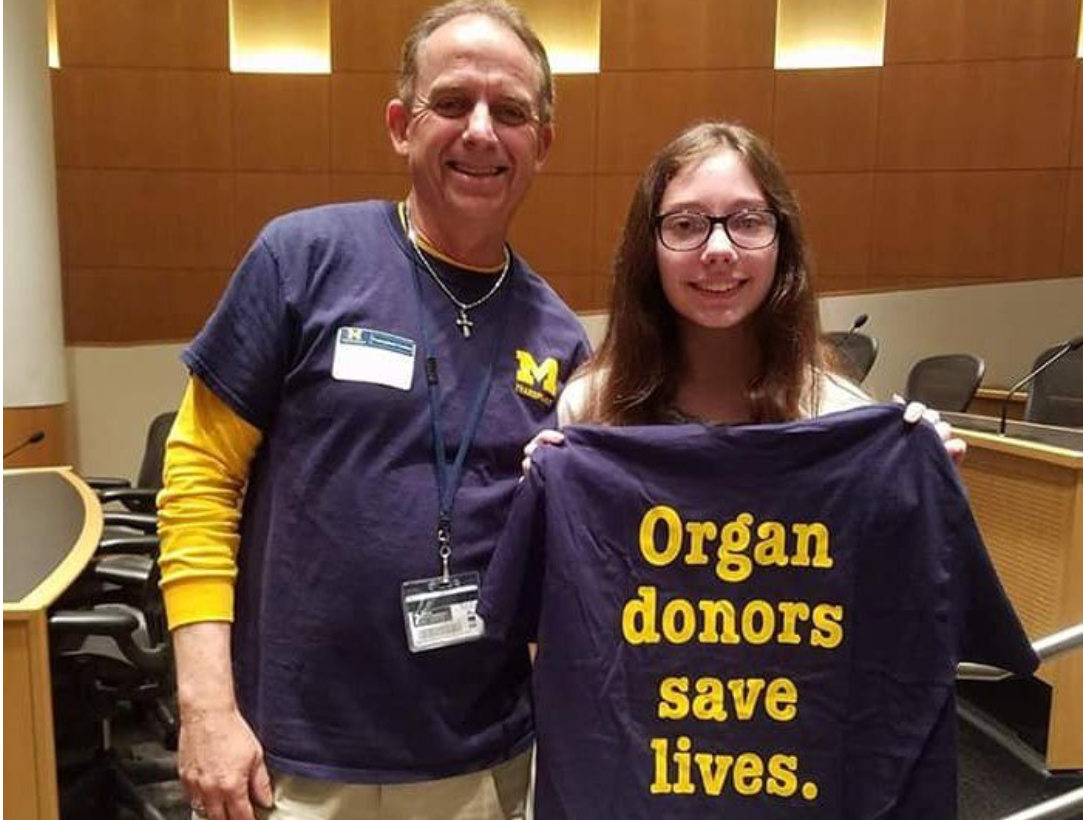
Martindale ultimately donated his kidney in January of 2013 to Jessica Schwerin, the girl from the newspaper photo, at the University of Michigan Transplant Center. The two met only a handful of times before the surgery. Today, Jessica is a graduate student studying neuroscience and serves on the board of directors for Kidneys for Kids.
RELATED: NICU Resources in the Ann Arbor Area
“She went from fighting for her life to building one,” Martindale said. “That’s what a kidney donation does.”

After retiring from construction due to physical wear and tear, Martindale founded Kidneys for Kids in 2022 with the goal of helping families find living donors for children in need. Nearly 2,000 children in the U.S. are currently waiting for kidney transplants, while thousands more rely on dialysis, and around 96,000 people nationwide need a kidney.
Kidneys for Kids works by partnering with children’s hospitals and transplant centers to help families share their stories through local media. Those stories often lead not only to donors for the featured child, but also to additional donations through paired kidney donation programs, in which one donor can trigger a chain that saves multiple lives.
Since 2022, Kidneys for Kids has helped facilitate 17 kidney donations.
Martindale mentioned that progress has been slower than necessary, prompting the creation of Drive to 7000. The campaign will span roughly 12,000 miles over eight weeks, visiting 33 transplant hospitals across the country. The journey will be documented for the Good Karma Network on Roku and will include hospital events, educational programs and media appearances.
Ann Arbor was chosen as the starting point because of Martindale’s personal connection to the city and the university hospital system. He has served as a peer mentor at the University of Michigan for more than a decade, and both he and Jessica received care there.
“This feels like coming home,” Martindale said.

The launch is expected to involve Michigan Medicine, Mott Children’s Hospital and local television coverage highlighting pediatric transplant patients.
Martindale emphasized that young people can play a major role in the campaign, even if they are not yet eligible to donate. Sharing stories, spreading accurate information and challenging misconceptions about organ donation can all make a difference, he said.
“Your generation has more reach than any before it,” Martindale said. “One shared story can save a life.”
Looking ahead, Martindale said his long-term goal is to help eliminate kidney transplant waitlists entirely through increased donation, education and prevention. He hopes Drive to 7000 will serve as a turning point.

“If we can do this once,” he said, “we can do it again, and faster.”


