
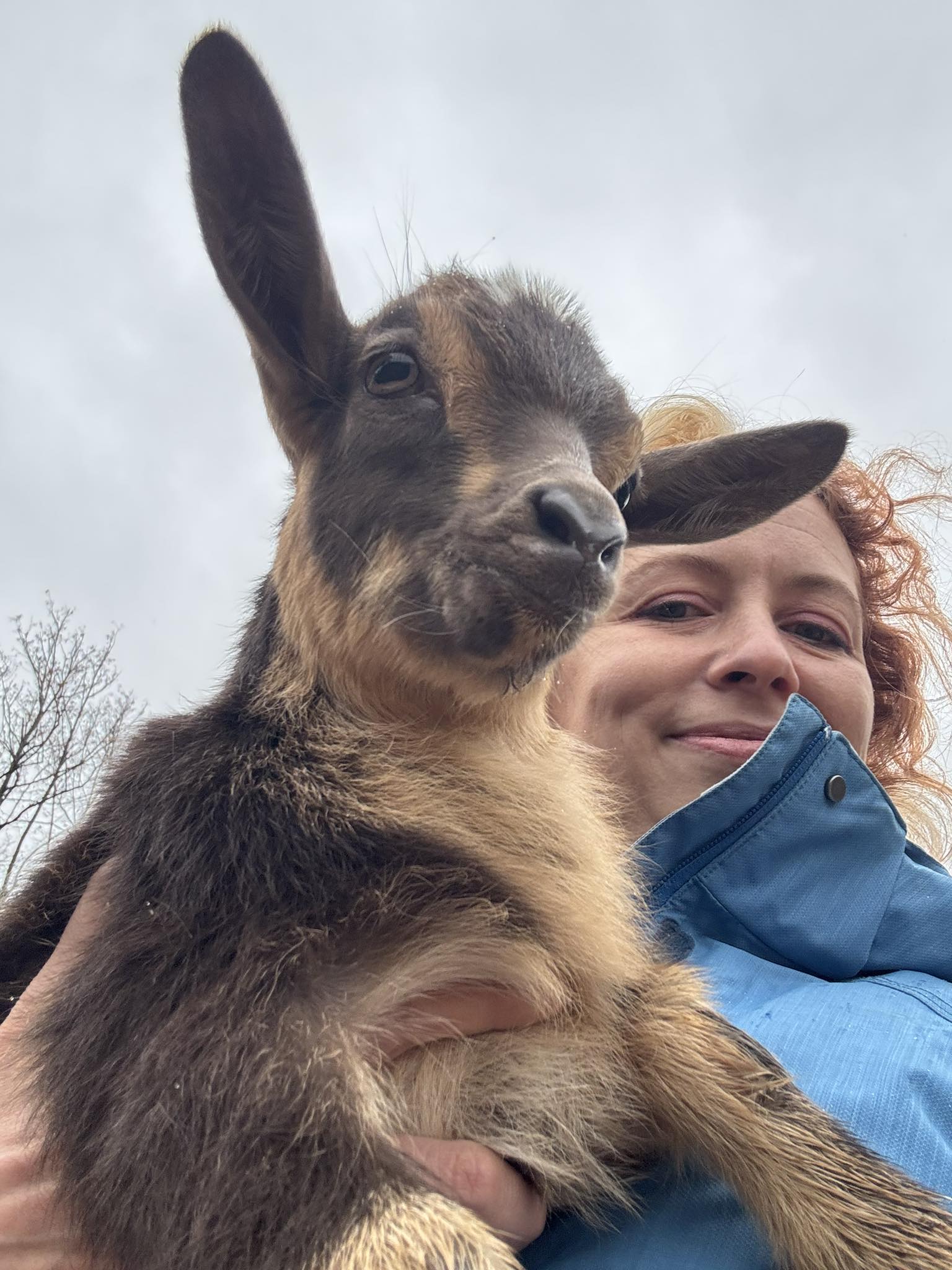
Have you ever wanted to live in an enchanted forest, a community homestead, a farm with yaks and goats and a historic apple orchard, an artist creative playground?
For Emily Rebelle, business owner and single mother of two, it’s her reality.
Waymeet is a homestead focused on environmental restoration and intentional community.
The homestead itself runs several businesses and welcomes its members to collaborate their own businesses.
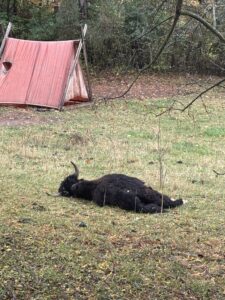
Waymeet owns five North American Heritage yaks, genetically similar to ancient wild-type yaks from Mongolia. They breed and raise heritage chickens (and sell chicks in the warmer months), bees and are restoring the apple orchard on their land. They sell yak fibers, hand combed and carded. You can host events like a small private wedding on their beautiful wild land. And–maybe best of all–you can visit the yaks!
“Living on a homestead with people we love is the dream,” Rebelle said. “We do meals together. We have collective finances. We support each other in our home. Everybody has a day job in addition to all of that. It’s hard to figure out how to go from dream to action, and we’re really good at taking the action, doing it messy, and figuring it out as we go, and that’s because of the heart of everyone involved and the trust we have here.”
Rebelle said their community tends to do a lot of private or invitation-based events. They’re connected to several other deep communities that are more public facing, but Waymeet itself has only Cider Fest as its main public event a year. They prefer to focus on tavern parties, music jams, their Beltane festival and bonfires.
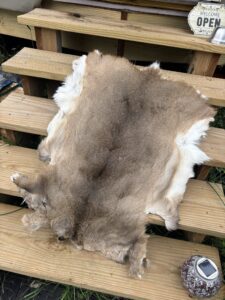
Rebelle just started a business crafting ritual tools out of feather and bone. She’ll be teaching deer and coyote tanning at the Michigan Folk School and one of the founding members, Irene, is teaching cordage and fletching. Rebelle describes these businesses as, “They’re a part of the land we’re on, but they’re personal businesses too.”
Waymeet began as a dream by one of the founders, Irene, who knew she wanted community and homestead since she was a young girl. Rebelle met the founding members, Justin, Irene and Abby, when she was pregnant with her now-seven-year-old, and was struck by how interesting, artistic and welcoming their community of friends was.
RELATED: “Granny Crafts” Trend as Teens Unplug and Embrace Handmade
About eight years ago the founding members, Rebelle, and their community all sat down and talked for over three hours (“I still have the original google doc!” Rebelle said.) about what everyone would want in a community homestead, the land, and the other people. Some people wanted to live together but wanted their own kitchen. Some didn’t want to live on the land, but wanted to visit. Some people, like Rebelle, really wanted an apple orchard and space for large mammals and goats.
“It’s really interesting to look back at that document and see we have a lot of those things,” Rebelle said. “And a lot of the people who were around then are still around now.”
Rebelle invested in the homestead by investing in the yaks before she moved to living on the homestead itself earlier this year, in a yurt that her community largely built for her themselves.
“My friend said to me, ‘wow, you are violently downsizing!”’ Rebelle said. “I went from a three bathroom, five bedroom house to a 24 foot yurt. But I love that I can clean it top to bottom in twenty minutes.”
Rebelle notes that the biggest change of transitioning to community living at a homestead is recognizing her personal tolerance and boundaries. “When I have my kids for the weekend,” Rebelle said. “I need to be mindful to not clean the common room kitchen, and to just clean mine.” She loves being right there. When movie nights are being hosted, she can put her kids to bed and still participate in the movie night. She doesn’t have to drive to help with the farm; she just has to step out her door. Her capacity is larger because she’s not tending and caring for a huge house.
I asked Rebelle what its like to raise her children on a community homestead. “It’s the dream to have a village raising your kids,” she said. “It’s like, wait, I can have support with my kids? It’s such a vulnerable catch twenty-two because in order to have support you have to trust the other adults you’re around, that they’re doing what you’d want done.”

No one else on the homestead has kids, so that was a steep learning curve for everyone. But everyone is supportive of having kids on the property, and knows that in order for kids to be there, they have to be able to be kids: noisy! “Everyone is watching out for them,” Rebelle said. “My seven-year-old is a firebug because every adult he knows is a professional fire performer. Someone will say to me that he’s asking to use a lighter; is he allowed?” Generally, the adults feel comfortable supervising, stepping in and helping parent.
“There’s no clear system of buying an amount of land, splitting it into parcels, making different amounts people are buying,” Rebelle said. “Sunward Cohousing (another community living group in Ann Arbor) is far more regimented and structured and they have to be, with that amount of people and folks in older generations that need everything in order, and capitalism constraints. Waymeet is high risk and high reward. It requires communication and vulnerability.”
For anyone else considering starting a small business in Ann Arbor, Rebelle suggests, “As a business coach and mentor, and someone who has multiple businesses, the biggest thing is to just do the market research. Understand who you’re trying to support and how they articulate the problem. Whether it’s someone looking for a ritual object, design services, or a coat, you’ve got to be able to articulate the problem in the same way the person is in their head or they won’t recognize your work is for them. Then get out there and sell the thing and test it!”
Rebelle does not recommend waiting till you have everything in order to test it, because that often burns people out. “Build things over time based on feedback with the people you’re working with, that will never fail because your building based on clients.”
Rebelle has built a successful business herself in addition to Waymeet. She’s been running Rebelle Incorporated for 5 years, helping women who identify as witches, healers and priestesses to scale a healing arts business, like intimacy, teaching and tarot cards. “I’ve had personal trainers, business coaches, breath work facilitators, and more figure out how they’re offering and how they connect to people and how to build consistent income.”


