
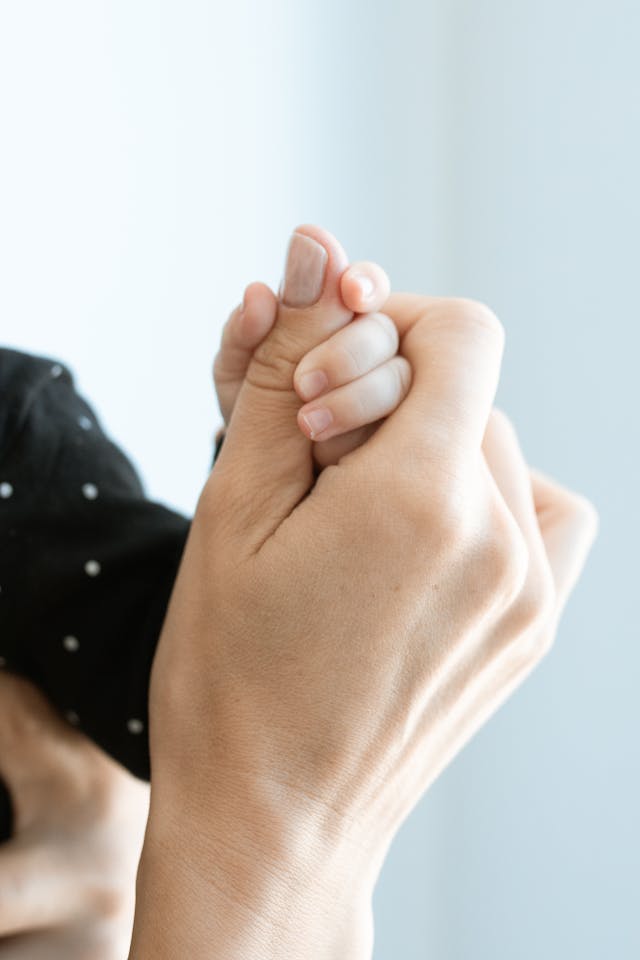
I’m gender-queer, which means that my gender can change from day to day. While I prefer they/them pronouns, I also accept she/her. I’ve spent a lot of my life exploring my gender and sexuality, which I think makes me a better mother. I’ll be able to help my daughter through whatever gender journey she might go on, and be a supportive person she can rely on. My current plan is to raise my daughter as gender-free as possible.
There are a lot of conversations about what gender-free parenting is. To me, it doesn’t mean giving my daughter they/them pronouns and not letting anyone know her gender. I don’t want to assign anything to my daughter based on my own experiences. She might thrive with the pronouns she has now, or she might thrive with different ones later in life. But that’s her journey, and I’m not going to take that from her.
I think, in a way, referring to her neutrally would work if we were in a different world where gender wasn’t real. That’s not our reality, so removing gender from my daughter at birth isn’t a realistic possibility. That being said, I’ll explain my own gender journey to her so she knows, early on, that she can explore.
The most important part of gender-free parenting is making her home a safe, gender-free space. To me, that looks like clothes, toys and colors having no gender. She can enjoy makeup, cars, football, ballet, pink and blue. None of those decisions will be because she is a girl. Many of her current clothes are hand-me-downs from both boys and girls, and I created her room before knowing her gender, so that any biases I might have wouldn’t creep in.
RELATED: “Are You Sisters?” The Assumed Heteronormativity During My Wife’s and My Pregnancies
Impact of language
Language is another important factor. Gender roles such as motherhood, becoming a wife, cleaning, cooking, being “for women”, none of that will be pushed upon my kid. Instead, I will teach her that cooking is nourishing for her body, that cleaning gives her a space where she can create, that sports keep her body moving and music helps bring joy. Everything will be about gain rather than gender. And as her mom, it’s my job to learn about whatever hobbies she takes on, but also include others who know about them as well. Different viewpoints lead to a more dynamic childhood, and only introducing her to my interests and thoughts would be limiting.
Language also refers to our guests. Casual statements like “That’s for boys,” or “Girls are so emotional,” can be incredibly detrimental. Kids take in more than we think, and you’d be surprised how much they remember. They trust adults and take what they say as fact. Therefore, we have to make sure the people in her life uplift her and don’t put her in a box.
Questioning everything
We cannot create a world that doesn’t have gender, so the next step is teaching our daughter to question. That will start with the media we consume. When something sexist, homophobic, or just stereotypical comes up in a show, we can have conversations with her about why that wasn’t portrayed well and how it could have been done differently.
Most importantly, we want to give her the space to be herself. If she wants to try different clothes, hairstyles, or pronouns, we won’t stand in her way. We will support every decision she makes, whether they are fleeting or permanent. Exploration is key in gender and sexuality, and having an open house will create an environment where she can come to us with questions.
Communicating with family
Not everyone parents the way we do, and we get a lot of opposition. A lot of our communication isn’t about long-term goals with our family; it’s about being in the moment. If someone in our daughter’s life says something we don’t agree with, we’ll call them out right there. If the pattern continues, we’ll have a serious conversation with them. And if, in the long run, they won’t accept how we parent our daughter, we will limit access. Hopefully, most people will respond well, since all we’re asking for is respectful language around our daughter.
We’ll also gently push back on gifts and clothes, or treating her differently from her cousins who are of a different gender. And when she’s old enough to communicate her wants, we’ll make sure that her gifts reflect that. Of course, this doesn’t mean we’re ungrateful for anything gifted to our daughter. But if she’s obsessed with football and keeps getting dolls, we need to speak up and defend her. Many people find connecting through gender, which isn’t a problem, but for our child, we would rather they find connection through her interests.
Lastly, we’ll be providing resources and evidence to defend our parenting. Sometimes, people don’t understand and think that if we’re parenting differently, we’re attacking how they parented. Resources can help them feel more comfortable, and also help family members get on board quicker.
Our daughter is amazing in every way, and we can’t wait to see who she becomes. All we want is to create a safe environment so that the decision is hers alone. She’s the boss, and I’m just here to support her.


