
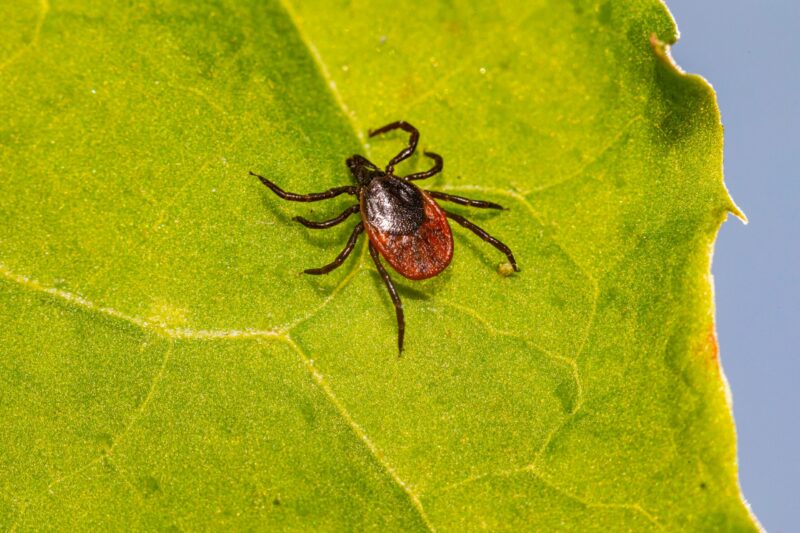
Camping, waterside strolls, boat rides along the river and more. As the temperatures rise, so do our opportunities to head outdoors and explore nature’s wonderland! Although spending time in the sun is a favorite summer pastime, insects put a damper on all the fun. Some summer pests commonly active in Michigan include mosquitos, silverfish, house flies, June bugs and ticks.
Read on to learn more information on ticks, signs and symptoms of tick bites in children, prevention tips for tick bites and how to treat them.
Where are ticks found?
Ticks are parasitic arachnids which dwell in warm and humid, grassy, brushy or wooded areas: places like bonfires, forest preserves, campsites or marshlands. But they can also be found in your backyard! Most active between April and September, they mature from egg to adult over two years. In addition, since they need a host to survive, they may also attach onto animals, making pets a possible vehicle into homes.
Ticks can carry various diseases, including anaplasmosis, babesiosis, ehrlichiosis, borrelia miyamotoi disease and Lyme disease. Blacklegged ticks carry the specific bacteria causing Lyme Disease.
There are two main types of ticks: wood ticks and deer ticks. Deer ticks, the smaller of the two, can spread Lyme Disease. Meanwhile, wood ticks carry Rocky Mountain spotted fever.
Tick bite symptoms
What types of signs of tick bites should you look for if your child has been outdoors and possibly exposed to them? According to one source, below are some key signs and symptoms of tick bites:
- Flu-like fever and chills
- Headache
- Fatigue
- Muscle aches
- Swollen glands
- Nausea
- Rashes/Icreased redness: Small purple/red dots, blotches
- Signature red bulls-eye shape rash which may ooze (Key indicator of Lyme Disease)
Preventing tick bites
A few ways to prevent tick bites in kiddos include:
- Apply tick-resistant insect repellents. Here is a helpful search tool.
- EPA-registered insect repellants
- DEET: An effective chemical tick repellent
- Picardidin
- Lemon Eucalyptus Oil (OLE)
- Para-Menthane-Diol (PMD)
- 2-undecanon
- Dress in long-sleeved shirts, long pants and high boots to limit exposure
- Wear light-colored clothes to allow quick tick identification
- Perform full body “tick checks” when kids have been playing outdoors
- Apply permethrin, a spray-on tick repellent, on boots, clothing and gear
RELATED: A Parents Guide to Summer Safety
Treating tick bites
If bitten by a tick, quick treatment is crucial:
- Remove ticks from childrens’ clothing immediately if found
This video from the CDC demonstrates the proper way to remove and dispose of a tick. Below are some key points:
- Use tweezers to grasp the tick close to the skin surface
- Pull Upwards
- Wash the affected area with rubbing alcohol or soap and water
- Dispose of the tick by placing it in alcohol, a sealed bag and wrap tightly in tape or flush it down the toilet
- Prophylaxis: Take a single antibiotic dose to prevent Lyme Disease (consult a your child’s pediatrician first)
- Watch for symptoms (outlined above) of Lyme Disease for 30 days
Additional resources
For more information on tick bite safety and prevention, parents can check out the below resources:
- CDC
- Michigan Department of Health and Human Services (Email for tick identification to [email protected])
- Health Department of Northwest Michigan
- University of Michigan C.S. Mott Children’s Hospital
- Michigan Medicine


